
Introduction
What if your investment could earn you a steady income today and grow stronger in value tomorrow? That’s exactly why many smart investors are turning their attention to commercial property. Unlike other assets, it offers the potential for higher rental returns, long-term leases, and strong capital growth. But is it really the right choice for you? In this blog, we’ll explore why commercial property is considered a smart long-term investment option, what makes it different, and the key factors you should understand before making a decision. Let’s break it down in simple terms.
What Is Commercial Property?
When most people think about real estate, they imagine houses or apartments. But there’s another powerful segment of the market that often delivers higher returns and long-term stability—commercial property.
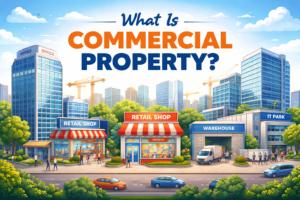
In simple terms, commercial property refers to real estate that is used for business purposes instead of residential living. These spaces are designed to generate income through rent or business operations. From office buildings to retail shops, this category plays a major role in economic growth. Many investors actively look for commercial property for sale because it offers the opportunity to earn regular rental income and benefit from long-term appreciation. Whether you plan to lease it out or use it for your own business, choosing to buy commercial property can be a strategic financial move. Let’s understand the different types of commercial property and how each works.
Types of Commercial Property
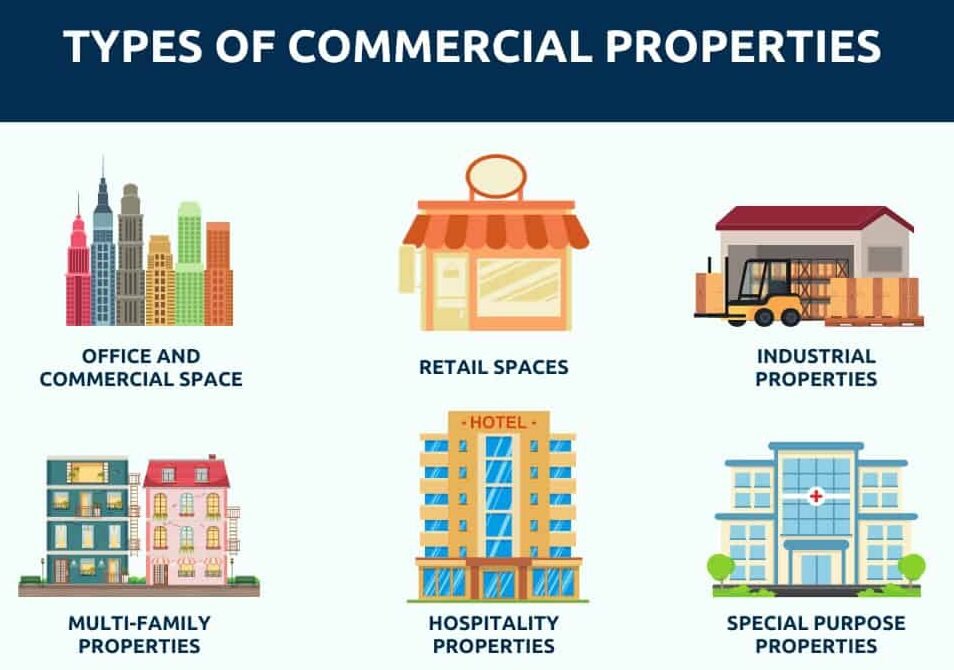
Commercial real estate is not limited to just one type of building. It includes several categories, each with its own benefits and investment potential.
Office Spaces
Office spaces are one of the most common forms of commercial property. These properties are rented by businesses, startups, and corporations to run their operations.
Office spaces can be:
- Standalone office buildings
- Units inside commercial complexes
- Corporate towers in business hubs
- Small office spaces in mixed-use projects

Why investors prefer office spaces:
- Long-term lease agreements (often 3–9 years)
- Stable rental income
- Professional tenants
- High demand in growing cities
If you are exploring commercial property for sale in business districts, office units are often a strong choice. Many investors choose to buy commercial property in IT hubs or central business districts because demand remains steady.As businesses expand, the need for well-located office spaces continues to grow. This makes office-based commercial property a reliable long-term asset.
Retail Shops and Showrooms
Retail shops and showrooms are commercial spaces used for selling products directly to customers. These properties are usually located in:
- Shopping complexes
- High-street markets
- Malls
- Commercial plazas
- Ground-floor units in busy areas
- Retail commercial property works best in high-footfall locations. The more visibility and accessibility a shop has, the higher its rental and resale value.
Key advantages:
- Premium rental rates in prime areas
- High demand in busy markets
- Strong resale value
- Suitable for both investors and business owners
Many people who want to buy commercial property for their own business prefer retail shops. At the same time, investors search for commercial property for sale in established markets because retail tenants often pay higher rent compared to residential tenants.However, location plays a crucial role. A retail shop in a prime area can outperform many other investment options.
Warehouses and Industrial Units
Warehouses and industrial units are commercial properties used for storage, manufacturing, and distribution. With the rise of e-commerce and logistics companies, this segment has seen massive growth.
These properties are typically located in:
- Industrial zones
- City outskirts
- Logistics hubs
- Areas near highways
Why warehouses are gaining popularity:
- Long-term contracts with logistics companies
- Lower maintenance costs
- High demand due to online shopping growth
- Large space requirements
Investors searching for commercial property for sale are increasingly considering warehouses because of stable tenants and strong demand. If you plan to buy commercial property for steady rental returns with relatively low management stress, industrial units can be a smart choice. The rapid expansion of delivery networks and supply chains continues to boost demand in this category.
IT Parks and Co-Working Spaces
Modern business trends have introduced new types of commercial property like IT parks and co-working spaces.
IT Parks
These are large commercial complexes designed specifically for tech companies and corporate offices. They often include:
- Advanced infrastructure
- Power backup
- High-speed internet
- Security systems
- Parking facilities
IT parks attract multinational companies and large enterprises, which means long lease durations and reliable rental income.
Co-Working Spaces
Co-working spaces are flexible office environments where freelancers, startups, and small businesses rent desks or small offices.Why they are they popular?
- Flexible leasing options
- Growing startup culture
- Increasing remote work trends
If you are looking to buy commercial property in emerging business hubs, IT parks, and co-working spaces offer strong potential. Many investors actively search for commercial property for sale in tech-driven cities because demand from startups and IT firms continues to rise. This category reflects how commercial property evolves with business trends.
Who Should Invest in Commercial Property?
Commercial property has long been considered a powerful wealth-building tool. Unlike residential real estate, it focuses on spaces used for business purposes—offices, retail shops, warehouses, industrial units, and mixed-use developments. But the big question is: who should invest in commercial property?
The simple answer? It’s not just for big corporations or seasoned investors. A wide range of individuals can benefit from it.
Here’s who should seriously consider investing:
Long-Term Investors
If you’re looking for steady rental income and long-term capital appreciation, commercial property can be a strong addition to your portfolio. Lease agreements in commercial spaces are often longer than residential leases, which means:
- Stable monthly income
- Lower tenant turnover
- Predictable cash flow
Business Owners
If you run your own business, it may make sense to buy commercial property instead of renting. Owning your workspace offers:
- Control over the premises
- Freedom to customize the space
- Protection against rising rental costs
- An appreciating asset on your balance sheet
Instead of paying rent to a landlord, you’re building equity in your own property.
Investors Seeking Higher Yields
Commercial property often provides higher rental yields compared to residential properties. For investors looking to maximize returns, this can be attractive. Many people exploring commercial property for sale are specifically searching for:
- Better ROI
- High-demand business locations
- Properties in developing commercial hubs
Diversified Portfolio Seekers
If you already invest in stocks, mutual funds, or residential real estate, adding commercial property can diversify your portfolio. It reduces dependency on one asset class and spreads risk more effectively.
How to Find the Right Commercial Property for Sale
Finding the right commercial property for sale isn’t just about browsing listings and choosing the first attractive deal. It requires research, planning, and strategic decision-making.Let’s break down the most effective ways to find the right opportunity.
Online Property Portals
The digital era has made property searching easier than ever. Online property portals are often the first stop for investors who want to buy commercial property.
These platforms offer:
- Advanced search filters (location, price, size, type)
- Detailed property descriptions
- Photos, floor plans, and sometimes virtual tours
- Comparison tools
When browsing online listings, keep these tips in mind:
- Focus on location first, features second
- Compare price per square foot
- Check nearby infrastructure and accessibility
- Look at the rental yield potential
Online portals allow you to explore multiple commercial property for sale options without physically visiting each one, saving both time and effort. However, don’t rely solely on online information. Listings can sometimes look better than reality.
Direct Developer Deals
Buying directly from developers can be a smart move, especially in new commercial projects.
Here’s why:
- Pre-launch pricing advantages
- Flexible payment plans
- Lower initial investment
- Customization options in early stages
Many developers offer attractive deals for early buyers. If you’re planning to buy commercial property in an upcoming business district or IT park, direct developer deals may provide strong appreciation potential.
Before committing, make sure to:
- Verify the developer’s track record
- Check project approvals and legal clearances
- Review possession timelines
- Understand maintenance charges and other hidden costs
A reputed developer with successful past projects reduces your investment risk significantly.
Site Visit and Due Diligence
No matter how good a listing looks online, never skip the site visit.
Physically visiting a commercial property helps you assess:
- Actual construction quality
- Surrounding commercial activity
- Accessibility and parking
- Nearby competitors
- Infrastructure readiness
During your visit, observe foot traffic if it’s a retail space or connectivity if it’s an office property.
Due diligence is equally important. Before finalizing any commercial property for sale, ensure:
- Clear property title
- Proper zoning approvals
- No pending legal disputes
- Transparent lease agreements (if tenanted)
- Accurate documentation
You may also consult:
- A property lawyer
- A real estate advisor
- A financial planner
Taking these steps ensures that when you buy commercial property, you’re making a well-informed and secure investment.
Commercial Property Trends in 2026
The commercial property market is constantly evolving. As we move into 2026, several trends are shaping investment decisions.
Rise of Flexible Workspaces
Hybrid work models are here to stay. Businesses are looking for:
- Flexible office spaces
- Co-working environments
- Shorter lease commitments
This shift is creating strong demand for modern, adaptable office commercial property in urban centers.

Growth of Tier-2 and Tier-3 Cities
Major metropolitan areas are no longer the only hotspots. Smaller cities are witnessing rapid business expansion due to:
- Lower operational costs
- Improved infrastructure
- Government incentives
Increased Demand for Warehousing and Logistics
With e-commerce continuing to grow, warehouse and logistics spaces are in high demand. Businesses need:
- Storage facilities
- Distribution centers
- Last-mile delivery hubs
Industrial commercial property is becoming one of the most promising sectors in 2026.
Sustainable and Green Buildings
Environmental awareness is influencing real estate decisions. Companies prefer:
- Energy-efficient buildings
- Green certifications
- Lower operational costs
Technology-Integrated Spaces
Smart buildings equipped with advanced security, automation, and energy management systems are becoming standard. Investors looking to buy commercial property should consider tech-enabled infrastructure as a value-adding feature.
Conclusion
In conclusion, investing in commercial property is about combining smart research with long-term vision. From understanding who should invest to evaluating listings, developer credibility, and market trends in 2026, every step plays a crucial role in building a profitable portfolio. The right location, strong infrastructure, and future growth potential can significantly influence returns. As emerging commercial hubs continue to reshape the market landscape, developments in well-planned regions are gaining attention. Projects in strategically designed areas such as Omaxe New Chandigarh reflect this shift, offering promising opportunities for those looking to invest with confidence and foresight.
Frequently Asked Questions (FAQs)
Is commercial property a good investment in 2026?
Yes, commercial property continues to be a strong investment option in 2026 due to rising demand for office spaces, retail hubs, warehouses, and flexible workspaces. With longer lease terms and higher rental yields compared to residential properties, it offers stable income and long-term appreciation potential.
What should I check before buying commercial property?
Before you buy commercial property, make sure to verify the property title, zoning approvals, legal clearances, and developer credibility. It’s also important to assess location, infrastructure, tenant demand, and expected rental returns.
How do I find the best commercial property for sale?
You can explore online property portals, connect directly with developers, or consult real estate advisors. Comparing multiple commercial property for sale options and conducting site visits will help you make a well-informed decision.
What types of commercial properties offer the highest returns?
Office spaces in business districts, retail shops in high-footfall areas, and warehouses in logistics hubs often deliver strong returns. The best option depends on market demand, location, and long-term growth prospects.
Is commercial property suitable for first-time investors?
Yes, first-time investors can invest in commercial property if they conduct proper research and financial planning. Starting with smaller units or pre-leased properties can reduce risk and provide steady income from the beginning.


