
Introduction
Real Estate Broker Commission Rates in India Explained
The Indian realesate market has evolved significantly over the last decade. With rising property prices, increasing urbanization, and the growth of digital property platforms, buying or selling a property has become more structured than ever before. However, one cost that continues to create confusion among buyers, sellers, landlords, and tenants is Real Estate Broker Commission.
Many people enter into a property transaction without fully understanding how brokerage works. Some assume it is fixed. Others believe it is negotiable. The reality lies somewhere in between. Real Estate Broker Commission plays a crucial role in determining the final cost of a property deal, and understanding it can help you save a substantial amount of money.
In this detailed guide, we will explain Real Estate Broker Commission rates in India, how they are calculated, who pays them, the legal framework governing brokerage, and practical strategies to manage or reduce these costs.

What is Real Estate Broker Commission?
Real Estate Broker Commission is the fee charged by a broker or real estate agent for facilitating a property transaction. This fee is usually calculated as a percentage of the total transaction value in case of a sale, or as one month’s rent in case of a rental agreement.In the Indian realesate ecosystem, brokers act as intermediaries between buyers and sellers. They help identify suitable property options, arrange site visits, negotiate pricing, and assist in closing the deal. In return for these services, they charge a commission.
The commission is typically payable once the deal is successfully finalized. If the transaction does not close, brokers usually do not receive payment unless otherwise agreed.
Why Do Brokers Charge Commission?
A common question in the property market is why Real Estate Broker Commission exists at all. The answer lies in the services and value brokers provide.
Brokers invest time, resources, and market knowledge into connecting the right buyer with the right property. They maintain networks of property owners, investors, developers, and tenants. Their role often includes:
- Identifying suitable property options
- Coordinating communication between parties
- Negotiating pricing and terms
- Assisting with documentation
- Ensuring smoother deal execution
For many buyers and sellers, especially those unfamiliar with the realesate market, this support reduces risk and saves time.
Standard Real Estate Broker Commission Rates in India
Real Estate Broker Commission rates are not fixed by law. They are market-driven and vary based on city, property type, and deal complexity. However, there are commonly followed industry standards.
Commission on Property Sales
For residential property sales, brokers usually charge between 1% and 2% of the total transaction value.In some cities, both buyer and seller may pay 1% each. In other cases, the seller pays the full 2%. The arrangement depends on prior agreement.For example, if a property is sold for ₹80 lakh and the commission rate is 2%, the total Real Estate Broker Commission would be ₹1.6 lakh.
Commission on Commercial Property
Commercial property transactions often involve larger ticket sizes and more complex negotiations. In such cases, Real Estate Broker Commission may range from 1% to 3%.Because commercial deals require market analysis, tenant profiling, and lease structuring, brokers may justify higher commission percentages.

Commission on Rental Property
In rental transactions, brokerage follows a different model.For residential rentals, it is typically equal to one month’s rent from both landlord and tenant.For commercial rentals, brokers may charge one month’s rent or a percentage of the total annual rent, generally between 8% and 15%.
Commission Structure in Different Cities
Real Estate Broker Commission can vary depending on geographic location.In metropolitan cities such as Delhi, Mumbai, and Bangalore, brokerage structures are relatively standardized due to high competition among brokers.In Tier 2 and Tier 3 cities, commission rates may vary widely and are often more negotiable.Luxury property markets may also have customized brokerage arrangements, especially for high-value transactions.
Factors That Influence Real Estate Broker Commission
Several factors affect the commission charged in a property transaction.
Type of Property
Residential property typically follows standard commission norms. Commercial property may involve higher brokerage due to longer transaction cycles.Luxury and high-end property transactions sometimes allow flexibility in commission negotiation.
Property Value
Higher property values may result in lower percentage rates but higher overall commission amounts. Brokers may agree to a slightly reduced rate for high-value deals because the total payout remains substantial.
Market Conditions
In a strong seller’s market where demand exceeds supply, brokers may close deals faster and maintain standard commission rates.In a slow market, negotiation on Real Estate Broker Commission becomes more common.
Scope of Services
A broker providing only introductions may charge a lower commission. However, full-service brokers offering marketing, valuation, negotiation, and documentation support may charge standard or slightly higher rates.
Legal Framework Governing Brokerage
The Indian realesate sector is regulated under the Real Estate Regulation and Development Act.Under this Act, real estate agents must register with their respective state RERA authorities. They are required to maintain transparency and avoid misleading advertisements.
Although RERA does not specify fixed Real Estate Broker Commission rates, it ensures that brokers operate within a regulated framework. Buyers and sellers are encouraged to work only with registered agents to reduce risk.
It is advisable to sign a written brokerage agreement that clearly outlines commission terms and payment conditions.
Who Pays Real Estate Broker Commission?
There is no single rule regarding who pays brokerage in India.
In property sales, the commission may be:
- Shared between buyer and seller
- Paid entirely by the seller
- Paid entirely by the buyer in rare cases
In rental property transactions, both landlord and tenant typically pay one month’s rent as brokerage.The most important step is to clarify commission responsibility before finalizing the property deal.
Is Real Estate Broker Commission Negotiable?
Yes, Real Estate Broker Commission is negotiable in most cases.
Negotiation may be easier when:
- The property value is high
- The broker is handling multiple deals for you
- The market has many competing brokers
- You provide direct leads
However, negotiation should be handled professionally. Brokers are more likely to reduce commission when they see long-term value or repeat business potential.
Benefits of Paying Real Estate Broker Commission
Despite the additional cost, brokerage offers several advantages.Brokers bring local market knowledge that individual buyers may lack. They understand pricing trends, buyer demand, and neighborhood insights.They also save time by shortlisting relevant property options. For working professionals or investors, this convenience is valuable.Negotiation is another key benefit. Experienced brokers often help secure better pricing, which may offset part of the Real Estate Broker Commission.
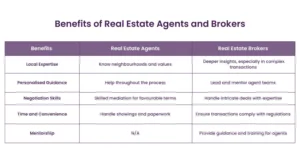
Drawbacks of Brokerage
The most obvious disadvantage of Real Estate Broker Commission is the additional cost.In high-value property transactions, even a 1% commission can amount to several lakhs.There is also a risk of working with unregistered or inexperienced brokers who may prioritize quick deals over client interests.This is why due diligence is essential before selecting a broker.
How to Choose the Right Broker
Selecting the right professional can make a major difference in your property journey.Look for RERA registration and verify credentials.Evaluate their local market knowledge and past transaction record.Discuss Real Estate Broker Commission openly and ensure clarity about services included.Request written confirmation of brokerage terms before proceeding.
Can You Avoid Real Estate Broker Commission?
With the rise of digital platforms, many buyers and sellers now explore no-brokerage models.Direct owner-to-buyer transactions eliminate Real Estate Broker Commission but require greater involvement.
You must handle:
- Market research
- Pricing decisions
- Property marketing
- Negotiation
- Legal documentation
While this approach saves commission, it increases personal responsibility and risk.
The Role of Technology in Reducing Brokerage Costs
The realesate industry is undergoing digital transformation.Online property platforms now provide transparent listings, virtual tours, and direct contact with property owners.Some platforms operate on fixed-fee or subscription models instead of percentage-based Real Estate Broker Commission.This shift is gradually redefining traditional brokerage structures in India.
Tax Implications on Brokerage
In certain cases, brokers may charge GST on their services if applicable.For high-value transactions, there may be tax compliance considerations.Always request a proper invoice for Real Estate Broker Commission payments to maintain financial records.Consulting a tax advisor for clarity on deductions or compliance is advisable.
Practical Tips to Manage Brokerage Costs
Planning ahead can help reduce overall property transaction expenses.Compare multiple brokers before finalizing one.Negotiate commission respectfully.Offer exclusive rights to a broker in exchange for a reduced rate.Understand the total transaction cost, including stamp duty, registration, and brokerage.Being informed gives you stronger negotiation power.
Common Misconceptions About Real Estate Broker Commission
One common myth is that commission rates are legally fixed. In reality, they are market-driven.Another misconception is that avoiding brokerage always saves money. In some cases, poor negotiation without professional guidance may result in higher property purchase prices.Understanding the true role of Real Estate Broker Commission helps you make balanced decisions.
Conclusion
Real Estate Broker Commission is an integral part of the Indian property market. Standard rates usually range between 1% and 2% for property sales and one month’s rent for rental property transactions.The actual commission depends on property type, location, services offered, and negotiation.As the realesate sector evolves with technology and regulation under the Real Estate Regulation and Development Act, transparency is improving. Buyers and sellers now have more options, including traditional brokers and digital property platforms.Before entering any property transaction, always clarify commission terms, confirm broker registration, and document agreements properly.A clear understanding of Real Estate Broker Commission ensures better financial planning, smoother transactions, and smarter property decisions.
Frequently Asked Questions (FAQs)
What is the average Real Estate Broker Commission in India?
The average Real Estate Broker Commission for residential property sales in India ranges between 1% and 2% of the total transaction value.For rental property, brokerage is usually one month’s rent from each party (landlord and tenant).
Who pays the Real Estate Broker Commission?
There is no fixed rule.
In property sales, the commission may be:
- Split between buyer and seller
- Paid entirely by the seller
- Occasionally paid by the buyer
In rental property transactions, both landlord and tenant generally pay one month’s rent as brokerage.
Is Real Estate Broker Commission legally fixed?
No, commission rates are not fixed by law. They are market-driven.However, brokers must register under the Real Estate Regulation and Development Act and maintain transparency in transactions.
Is Real Estate Broker Commission negotiable?
Yes, in most realesate transactions, brokerage is negotiable.
You may be able to negotiate if:
- The property value is high
- You are a repeat client
- The market has strong competition among brokers
Professional negotiation increases the chances of a reduced commission.
When is Real Estate Broker Commission paid?
Brokerage is usually paid after the deal is successfully closed.For property sales, it is often paid at the time of agreement signing or registration.
For rental property, it is generally paid when the lease agreement is finalized.


